
Suicide is a word we whisper
Suicide Grief Therapist in Oregon | Support for Suicide Loss Survivors


Suicide loss is unique
Grief after suicide loss is unlike any other. I know that because I have lived it.
When someone you love dies by suicide, the grief is tangled with questions that have no answers. Why didn't I see it? Could I have stopped it? What did I miss? What did they feel that they couldn't tell me?
These questions don't stop. And the world around you often doesn't know what to say, which can leave you feeling more alone in this grief than in any other.
Check my Psychology Today profile HERE.
Why is this grief different
Suicide loss survivors carry a unique kind of pain. The stigma. The silence. The pervasive guilt that comes with it.
This type of grief is one of the loneliest forms of loss, and yet it is one of the hardest to talk about openly. Many survivors find that the people around them don't know what to say, step back instead of in, or change the subject out of discomfort. So you end up carrying something enormous in silence, precisely when you most need someone to sit with you in it.
You should not have to do this alone. And you don't have to.
In 2005, my father died by suicide. I have sat with that loss for over twenty years. It sent me on a journey — personally and professionally — that has shaped everything about how I show up in this work.
I am not a clinician who studied this from the outside. I am a survivor who built a life's work from the inside.
There is no rushing or 'fixing' this, but there is a way through, and you do not have to find it alone.
Reach out when you're ready. I will be here.
[ Get in touch ]

The neuroscience of suicide grief
Suicide grief affects the nervous system in specific, identifiable ways. The traumatic nature of the loss, the unanswered questions, the stigma — all of these layer onto the brain's grief response in ways that make this type of loss particularly hard to process alone. Understanding what is happening in your brain does not take the pain away. But it gives you a framework and a path.
When the loss is sudden, violent, or carries the weight of unanswered questions, as suicide loss almost always does, the brain's threat response activates alongside it. This means the nervous system is simultaneously grieving and battling to survive. That is an enormous amount to carry. It also explains why suicide loss survivors so often feel not just sad, but frozen, hypervigilant, or unable to make sense of ordinary life.
It is not a weakness. It is your brain doing exactly what it was designed to do in the face of something it was never designed to face.
Check my Psychology Today profile HERE.


Training for therapists
I also train mental health professionals in suicide grief, and suicide prevention. Because survivors deserve therapists who understand what they are carrying, and our formal training does not prepare us for that.
If you are a clinician who has sat across from a suicide loss survivor and felt unsure of what to say or where to go, you are not alone in that. Most of us were never taught this. There is no shame in not knowing. There is only the responsibility to learn. That is what this training is for.
My Book
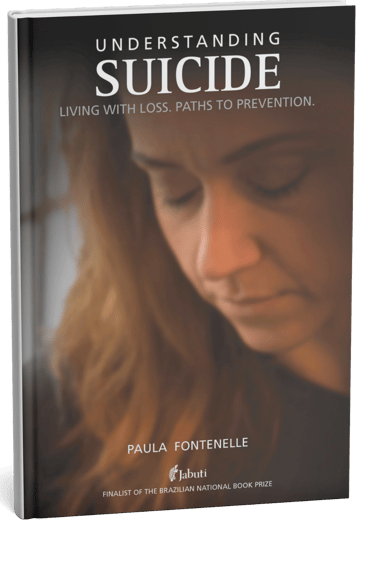
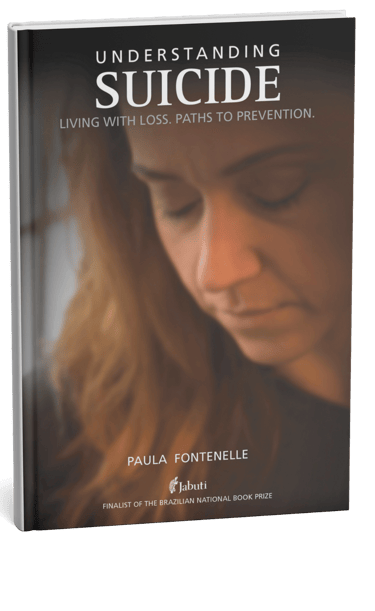
Understanding Suicide: Living With Loss, Paths to Prevention, by Paula Fontenelle
Written from personal experiences and deep research. For survivors, families, therapists, and anyone searching for meaning after loss. Paula Fontenelle's book was a finalist in the Brazilian Book Award.
Purchase the book HERE (English)
Portuguese version HERE.
Course for the general public
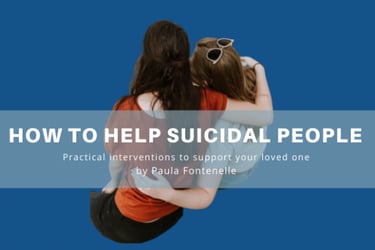
“How to help suicidal people.”
This course walks you through everything you need to know to show up for someone who is struggling with suicidal thoughts. Starting with a clear introduction to suicide and how to understand it without fear or judgment, you will learn to recognize the warning signs, understand how a suicidal mind works, and identify the risk and protective factors that matter most in a crisis.
The second half of the course moves from knowledge to action. Two dedicated modules on how to help give you the practical tools, language, and confidence to have the conversations that matter: what to say, what to avoid, when to step in, and how to connect someone to professional support. By the end, you will know how to help your loved one.
Listen to my podcast "Understand Suicide:" Over 100 episodes of honest, unfiltered conversations with loss survivors, mental health specialists, and people who have lived with suicidal ideation. No judgment. No clinical distance. Just real people talking about one of the hardest subjects there is.
Schedule a call
Let's talk
paula@flourishingmindscorp.com
+1 971 2361388